Fields of research
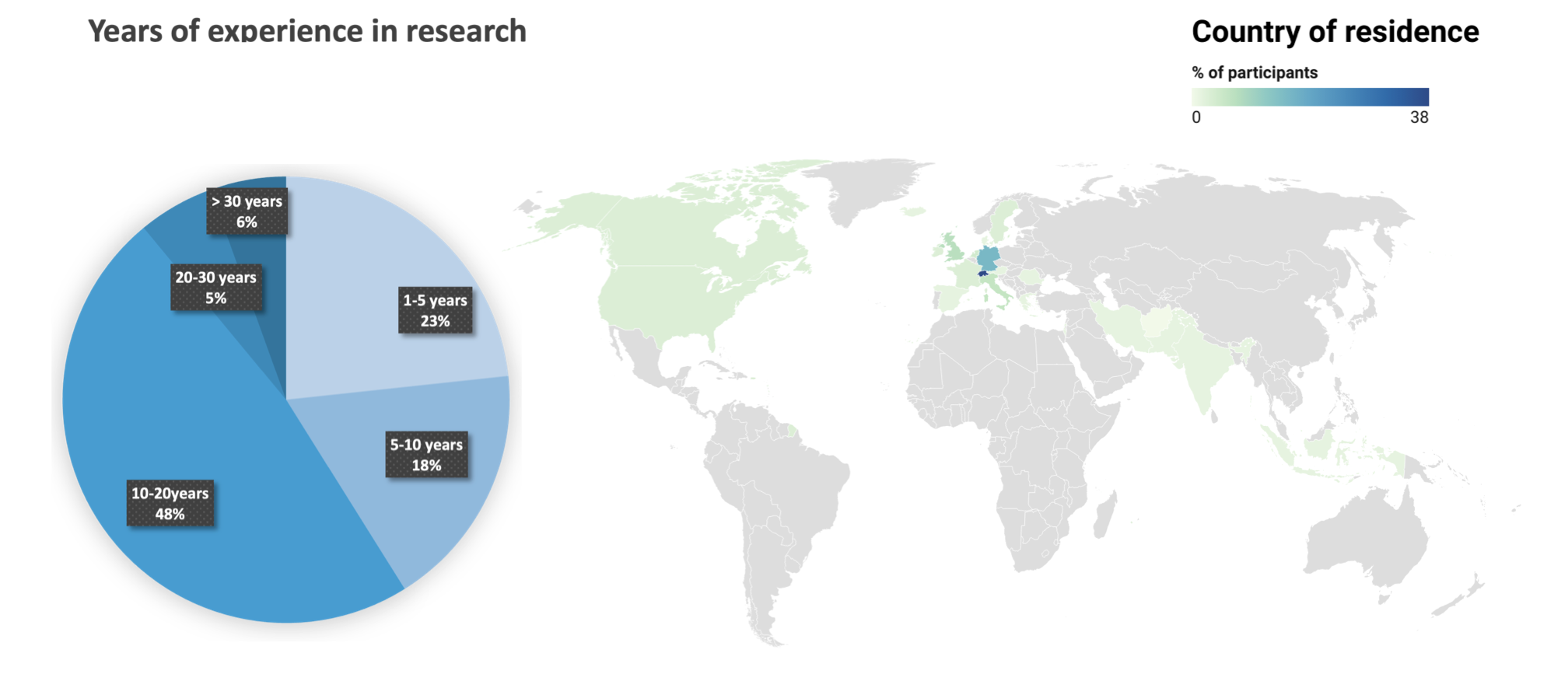
Overall a wide range of expertise was reported. Reflecting the nature of the survey dissemination (among the Board Members networks), fields like neuroscience, psychology, and interdisciplinary approaches within cognitive and experimental sciences were overrepresented.
Summary of Fields
- Neuroscience and Psychology: Dominates the list with numerous specialized areas including pain perception, cognitive neuroscience, social neuroscience, and mental health. Specialized fields listed inlcludde: forensic psychology, neuropsychology, developmental psychology, and emotion regulation.
- Cognitive Science: Significant interest with overlaps in experimental psychology, human factors, and generative AI.
- Interdisciplinary Research: Diverse fields including digital health, human-computer interaction, evidence synthesis, and tissue regeneration.
- Philosophy and Psychotherapy: Fields include philosophy of science and psychotherapy practices.
- Higher Education and Engineering
Motivation to consider joining AIR and ideal expectations
A diversity of motivations and expectations were expressed, which reflected a clear desire for a supportive, independent, and collaborative research environment that addresses the shortcomings of traditional academic structures.
Summary of Categories:
- Networking and Collaboration
- Alternative to Traditional Academia
- Career Support and Opportunities
- Research Environment and Resources
- Interdisciplinary and International Engagement
- Innovation and Quality in Research
- Community and Support Systems
- Critical Perspectives on Current Academic Structures

Experience that would benefit the AIR community
Collectively, respondents bring diverse experiences to the community, which include research, organizational leadership, policy making, advocacy, mentoring, community building, interdisciplinary collaboration, science communication, and other relevant areas — all valuable for fostering a dynamic and supportive research community.
Interestingly, several responded “NO”. This highlights an interesting divide between those that are aware of the values of the their previously acquired skills, and those that may not see this readily. A community of supportive peers or peer-mentors can help to reframe this perception.
Summary of Categories:
- Domain-Specific Research and Academic Expertise
- Organizational and Leadership Experience
- Interdisciplinary and Collaborative Work
- Policy, Management, and Administration
- Science Communication and Advocacy
- Educational and Mentoring Experience
- Community Building and Outreach
- Interdisciplinary and Collaborative Work
- Other Relevant Experiences
Additional comments & suggestions for AIR
Overall, the feedback was encouraging and constructive, and indicated which areas the AIR Board needs to flesh out a bit more: status, as well as a description of existing/intended resources and their maintenance/handling. Respondents were enthusiastic for the association and their interest in contributing to its development.
 AIR
AIR 
Leave a comment